


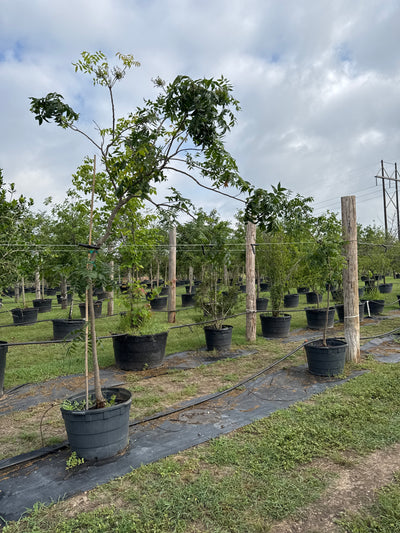


Fig Black Mission


Fig Black Mission
Use collapsible tabs for more detailed information that will help customers make a purchasing decision.
Ex: Shipping and return policies, size guides, and other common questions.
The Black Mission Fig is one of the most popular and reliable high-quality figs available. Originally brought to North America by Franciscan missionaries, it is prized for its "jammy" texture and distinct, dark-purple skin. The Black Mission Fig is a "bifere" variety, meaning it can produce two harvests. You can expect up to 100 delicious figs abundant in fiber, potassium, and antioxidants per mature tree season.The tree is a vigorous grower with large, deeply lobed, tropical-looking leaves. It is highly adaptable and can be grown as a large shade tree or pruned heavily into a compact bush for smaller spaces. The Black Mission Fig adds a touch of Mediterranean flair to any landscape whether that be an addition to your fruit orchard, backyard, or garden.
| Scientific Name | Ficus carica 'Mission' |
|
Foliage: Deciduous |
Leaves: Large, deeply lobed, and palmate. They typically have 3 to 5 distinct lobes and a rough, sandpapery texture on the top with a fuzzy underside. Flowers: Inverted (Syconium). Unlike most fruit, the flowers are internal. They bloom inside the developing fruit and are not visible from the outside. Fruit: Pear-shaped with deep purple to black skin. The flesh is a rich strawberry-pink to red, known for a dense, syrupy, and honey-like flavor. Seeds: Numerous and tiny. These are technically "achenes" contained within the pulp, providing a delicate, characteristic crunch. Bark: Smooth and silvery-gray. The bark is relatively thin and can be prone to sunscald in extremely hot, exposed locations. Young trees in high-heat zones benefit from "whitewashing" the trunk with a diluted white interior latex paint to prevent cracking. |
| Life Span: Perennial | A Black Mission fig tree typically lives for 50 to 75 years of productive fruit-bearing, though under ideal outdoor conditions, healthy trees can survive for over 100 years. |
| Mature Height | 15 – 30 feet (if unpruned); easily maintained at 8–10 feet. |
| Mature Width (Spread) | 15 – 30 feet (spread often matches height). |
| Growth Rate | Fast. Can grow 2–4 feet per year under ideal conditions. |
| USDA Zone/Chill Hours |
Zone 7-11 (requires winter protection in Zone 7). While hardy, a sudden hard freeze can kill a Black Mission fig down to the ground. In colder regions, planting against a south-facing brick wall provides a "heat sink" that can keep the tree several degrees warmer at night. Requires 100 or fewer chill hours (extremely low-chill, making it ideal for warm climates). |
PLANT CARE & CHARACTERISTICS
Light Requirements: Full Sun. Requires at least 6 to 8+ hours of direct, unfiltered sunlight daily. Ample sun is essential for heavy breba and main crop fruit production and for developing high sugar content in the figs.
Water Requirements: Moderate. Needs consistent moisture (~1 inch per week) while establishing and during heavy fruiting. Once established, shallow, weekly soakings during summer dry spells prevent fruit drop, leaf yellowing, or splitting fruit.
Drought Resistance: High (Once Established). Possesses a wide, extensive root system that tolerates drought well, though severe or prolonged drought stress can cause the tree to drop its developing crop prematurely.
Soil Type: Well-Drained, Organically Rich Soil. Adaptable to loam, sand, or clay as long as drainage is good. Prefers a soil pH of 6.0 to 7.5. Highly sensitive to waterlogged, soggy roots.
Deer Resistance: Moderate to High. The thick, milky latex sap inside the stems, leaves, and unripe fruit acts as a natural chemical defense, making mature foliage unpalatable to deer. However, hungry deer may occasionally browse soft spring growth.
Pest/Disease Resistance: Good Overall Hardiness.
- Root-Knot Nematodes: Highly susceptible in warm, sandy soils; mulching helps mitigate impact.
- Fig Rust / Leaf Spot: Moderate susceptibility in hot, humid climates; easily managed with good canopy airflow and avoiding overhead watering.
- Birds & Wasps: High pressure on ripe fruit—netting is recommended as figs reach peak sweetness.
Pollination: Self-Fruitful (Parthenocarpic). The Black Mission fig produces fruit through parthenocarpy, developing sweet, edible figs without fertilization or pollen transfer. You only need a single tree to yield full crops; no second tree or pollinator insect is required.
HARVEST
| Crop | Timing |
| Breba Crop: Grows on the previous year's mature wood. Typically produces larger, darker figs, though yield varies by local winter severity. | Late spring/ early summer |
| Main Crop: Grows on the current season's new growth. Provides the main, heavy harvest with deep purple-black skin and sweet magenta flesh. | Late summer/ early fall |
YIELD
| TREE AGE | YIELD | NOTES |
| Year 1–2 | 0 – 5 lbs | Establishment. The tree may produce a few "sample" figs, but focus should be on structural growth. |
| Year 3–5 | 15 – 40 lbs | Early Bearing. The tree begins to produce a reliable "Main" crop on new wood. |
| Year 6–10 | 50 – 150 lbs | Young Maturity. Expect a light "Breba" crop in June and a very heavy "Main" crop in late summer. |
| Year 15+ | 200 – 400+ lbs | Peak Maturity. A full-sized, unpruned tree can produce a massive volume of fruit. |
STORAGE/SHELF LIFE
| STORAGE METHOD | SHELF LIFE | NOTES |
| Countertop | 1 Day | Keep at room temperature only if eating immediately. Do not stack them; they bruise under their own weight. |
| Refrigerator | 2 – 5 Days | Store in a single layer on a paper-towel-lined plate. Cover loosely with plastic wrap. Keep at 32°F – 35°F. |
| Freezer | 8 – 12 Months | Freeze whole or sliced on a tray first (flash freeze) before moving to a vacuum-sealed bag to prevent clumping. |
| Dried | 12 – 24 Months | Black Mission figs are the industry standard for drying. Store in airtight containers in a cool, dark place. |
Critical Handling Tips
1. Avoid the Wash: Never wash a fig until seconds before you eat it. The skin is porous and will absorb water, causing the fruit to split, sour, or mold within hours.
2. Cold Chain: If you cannot eat them immediately, move them to the coldest part of your refrigerator as soon as they are picked. Cooling them down quickly "puts the fruit to sleep" and can extend the life from 2 days to 5 days.
3. Fragility: Black Mission figs have very thin skins. Use shallow baskets for harvesting so the bottom layer of fruit isn't crushed.
4. The Sap Warning: When pruning or harvesting, the tree leaks a white, milky latex sap. This can be a skin irritant for some people. It can also cause "photo toxicity", making your skin hypersensitive to sunlight. Wearing gloves and long sleeves is recommended during heavy maintenance.
5. Identifying Spoilage
- The Sour Smell: Because of their high sugar content, figs ferment quickly. If the fruit smells slightly like wine or vinegar, the internal sugars have begun to turn.
- Mold at the "Eye": Check the ostiole (the small hole at the bottom). If you see white or grey fuzz, discard the fruit immediately.
6. Seal Large Cuts: While figs heal well, large cuts (over 2 inches in diameter) in humid climates can be an entry point for dried fruit beetles or decay. Ensure cuts are clean and made at a slight angle so water sheds off.
PRUNING
Pruning a Black Mission fig depends largely on the age of the tree and whether you prioritize the early breba crop or the main late-summer harvest.
1. Seasonal Timing
- Primary Pruning (Late Winter / Early Spring): Perform major structural pruning while the tree is fully dormant, right before new growth begins.
- Summer Maintenance (Mid-to-Late Summer): Lightly pinch back vigorous tip growth to encourage branching and direct energy into ripening the main crop.
2. Pruning Strategy: Breba vs. Main Crop. How heavily you prune affects your harvest timing:
- To Preserve the Breba Crop (Late Spring Harvest):T Breba figs develop on last year's wood. Avoid severe tip-cutting across the entire canopy in late winter, as removing last season’s terminal branches removes the breba buds.
- To Maximize the Main Crop (Late Summer Harvest): Main crop figs grow on new wood produced in the current season. Moderate to heavy pruning in late winter stimulates vigorous new shoots, leading to a heavier main crop.
Step-by-Step Dormant Pruning Procedure
1. Clean and Sanitize Tools: Pruners, loppers, or hand saw.Sanitize blades with rubbing alcohol or a 10% bleach solution. Fig sap can be sticky and irritation-causing, so wear gloves.
2. Remove the '3 Ds' and Suckers: Cut out all dead, damaged, or diseased wood back to healthy tissue. Clear away suckers growing from below the graft line or root crown unless training a multi-trunk bush.
3. Open the Canopy: Selectively cut crisscrossing, inward-growing, or downward-sloping branches to open up the center for sunlight and air movement.
4.Heading Cuts for Height Control: Reduce the height of main scaffold branches by cutting back to an outward-facing lateral bud or branch to keep fruit within harvesting reach.
Growth Forms
| Form | Best For | Pruning Style |
| Single-Trunk Tree | Open ground, traditional orchard space | Establish 3–5 main scaffold branches at 2–3 feet off the ground; keep trunk bare below. |
| Multi-Trunk Bush | High-wind areas, winter protection zones | Allow 3–4 strong suckers to grow from the base; rotate out older trunks every few years. |
| Container / Espalier | Patio growing, tight spaces, cold climate storage | Head back main leader early; aggressively prune back side shoots annually to maintain compact shape. |


