


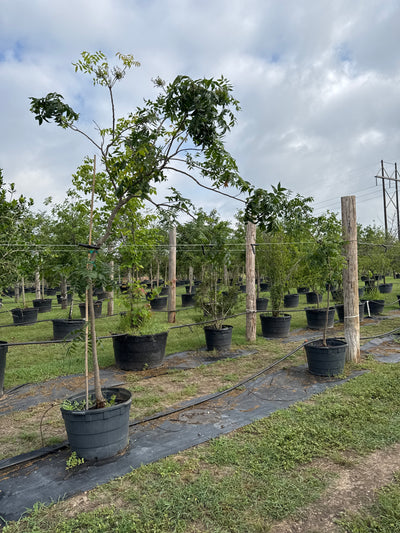


Pear Bartlett

Pear Bartlett
Location on Farm:
🌱 Planting Installation
The Bartlett Pear is the world’s most recognized pear variety, prized for its classic bell shape and the quintessential "melting" texture of its flesh. The fruit features a signature golden-yellow skin when fully ripe, and is famous for its extremely sweet, aromatic, and buttery white flesh. The tree maintains a formal, upright, and oval habit. In the spring, it is blanketed in large, fragrant white blossoms, and its bright green, finely serrated leaves turn a brilliant yellow or orange in the fall. Bartlett pears are known for being "precocious," meaning the tree typically begins bearing fruit at a younger age than other European varieties. They are heavy producers, often yielding hundreds of pounds of fruit per season at maturity. It is unique in that it must be picked green and "counter-ripened" to achieve its perfect, grit-free consistency. Bartlett pears serve as the gold standard for fresh eating and are the top choice globally for canning and preserves.
| Scientific Name | Pyrus communis 'Bartlett' (also known as Williams' Bon Chrétien) |
| Foliage: Deciduous |
Leaves: Broadly ovate with finely serrated edges and a glossy, bright green surface. They turn a pleasant yellow-to-orange in the autumn. Flowers: Large, pure white clusters that bloom in mid-spring. They are highly fragrant and very attractive to honeybees. Fruit: Large, classic bell-shaped (pyriform). Starts green and turns a signature golden-yellow when ripe, sometimes with a slight red blush. Seeds: Small, teardrop-shaped brown seeds located in a central core. Bark: Reddish-brown and smooth when young, transitioning to a gray-brown with shallow furrows and small scales on mature trunks. |
| Life Span: Perennial | The average lifespan is 50 to 75 years, with healthy trees often living and producing fruit for over 100 years under optimal care. |
| Mature Height | 15 – 20 feet (Maintained easily at 12–15 feet). |
| Mature Width (Spread) | 12 – 15 feet (Classic upright, oval habit). |
| Growth Rate | Fast. It establishes quickly and begins fruiting early. |
| USDA Zone | Zone 5 – 8 (Prefers slightly cooler, less humid climates). |
| Chill Hours | Requires 800 chill hours (Higher requirement; best for stable winter areas). |
PLANT CARE & CHARACTERISTICS
Light Requirements: Full Sun. 6–8 hours minimum. Direct light is crucial for fruit sugar development and drying leaves to prevent disease.
Water Requirements: Moderate. Needs deep, consistent watering (1 inch per week) during the growing season to prevent fruit drop.
Drought Resistance: Low to Moderate. Less drought-tolerant than the Orient; moisture stress quickly leads to smaller fruit and "gritty" flesh.
Soil Type: Well-Drained Loam. Prefers fertile soil with a pH of 6.0–7.0. It is sensitive to "wet feet" and poor drainage. Bartlett pears may benefit from annual fertilization in early spring with a balanced fertilizer to provide essential nutrients for healthy growth and fruiting.
Deer Resistance: Low. The sweet, aromatic fruit and tender new growth are highly attractive to deer.
Pest/Disease Resistance: Low/Moderate. Highly susceptible to Fire Blight. Requires careful monitoring and excellent air circulation.
- Pro-Tip: During installation, ensure the tree is placed in a spot with the best possible air circulation on the property. Avoid "tucking" it into a corner or behind a dense evergreen screen. High airflow is the best natural defense to keep the foliage dry and reduce the risk of the bacterial infections that can strike this variety during humid springs.
Pollination: Self-fertile. However, yield increases with a cross-pollinator. It pairs perfectly with an 'Anjou', 'Orient', or 'Bosc'. (Note: The 'Seckel' is often incompatible with 'Bartlett').
Harvest: Late Summer. Typically matures in August. Bartletts are the most sensitive to the "counter-ripening" rule, meaning they must be picked while still green and "rock hard". If they turn yellow on the tree, the interior will become "mealy" or gritty and lose its flavor. Picking them green and chilling them allows the starches to convert to sugars evenly throughout the fruit.
3 Management Essentials for the Bartlett Harvest
1. How do you know when a Bartlett is ready to eat after it’s been on the counter? "Check the Neck" Rule. Apply gentle pressure with your thumb to the "neck" (the stem end) of the pear. If it gives slightly, the pear is at peak ripeness. If the middle of the pear is soft, it is likely overripe.
2. The Ripening Process: To get that perfect buttery texture, your clients should follow this "chill-then-thaw" method
- Pick the pears when they are full-sized and green.
- Store them in the refrigerator for at least 2 days (up to 2 months).
- Take them out and put them in a fruit bowl. They will ripen into gold-standard fruit in about 4–5 days.
3. Fragility of the Skin: Unlike the Orient or Seckel, the Bartlett has very thin skin that bruises easily once it starts to turn yellow. Handle the fruit like eggs during the harvest. Even a small bump when the fruit is green will show up as a large brown bruise once the pear softens.
YIELD
| Tree Age | Yield (Lbs) | Estimated Fruit Count |
| Year 1: Establishment | 5 – 10 lbs | 10 – 20 large pears |
| Year 2: Expanding | 25 – 45 lbs | 50 – 90 large pears |
| Year 3: Sub-Mature | 60 – 100 lbs | 120 – 200 large pears |
| Year 4: Sub-Mature | 120 – 180 lbs | 250 – 350 large pears |
| Year 5+: Full Maturity | 200 – 300+ lbs | 400 – 600+ large pears |
STORAGE/SHELF LIFE
| STORAGE METHOD | SHELF LIFE | NOTES |
| Cold Storage (30°F - 34°F) |
2 – 3 Months | Mandatory. Chilling the hard green fruit "activates" the ripening enzymes. |
| Countertop (After Chilling) |
4 – 7 Days | Pears will turn from green to golden yellow and become soft. |
| Canning Preserving |
2+ Years | The #1 choice globally for canned pears in syrup. |
| Freezing (Sliced) |
8 – 10 Months | Best for use in smoothies, pies, or tarts. |
PRUNING
1. The "10-Inch Rule" for Fire Blight: Because Bartlett is sensitive to blight, pruning isn't just about shape—it's about surgery.
- The Action: If you see a twig that looks like it has been scorched by a blowtorch (a "Shepherd’s Crook"), prune it off 10 inches below the visible damage into healthy wood.
- The Critical Step: Sterilize your pruners with 70% isopropyl alcohol or a 10% bleach solution between every single cut to avoid spreading the bacteria to the rest of the tree.
2. Counteracting "Apical Dominance": Bartletts love to grow straight up. If you don't intervene, you'll end up with a 20-foot tall "telephone pole" with no fruit-bearing side branches.
- The Technique: "Head back" the central leader in late winter to a height where you want the next set of branches to emerge.
- The Benefit: This forces the tree to push out horizontal side-growth, keeping the fruit within reach of the client without needing a 12-foot ladder.
3. Thinning the "Fruiting Spurs": As the Bartlett matures, it will produce clusters of short, stubby twigs (spurs) that carry the fruit.
- The Maintenance: If a branch is completely covered in spurs, the fruit will be small and poor quality. Thin the spurs so they are spaced 4 to 6 inches apart.
- The Payoff: This allows the tree to put all its energy into making those large, iconic "grocery store" sized pears.
4. Widening the "Crotch Angles": Bartlett wood is notorious for being upright and "tight." Narrow angles are weak and will split under a 200-lb harvest.
- The Professional Move: While the tree is young (like your 15-gallon stock), use branch spreaders or pull branches down to a 45 to 60-degree angle. Horizontal branches produce more fruit and are structurally 10x stronger than vertical ones.
PRUNING SUMMARY
| Pruning Phase | Timing | Primary Goal |
| Sanitation | Immediately | Removing any branch that looks blackened or "hooked" (Fire Blight). |
| Structural Thinning | Late Winter | Removing narrow "V" crotches and competing leaders. |
| Summer Pruning | Late June | Removing "Water Sprouts" (vertical shoots) to improve light. |