


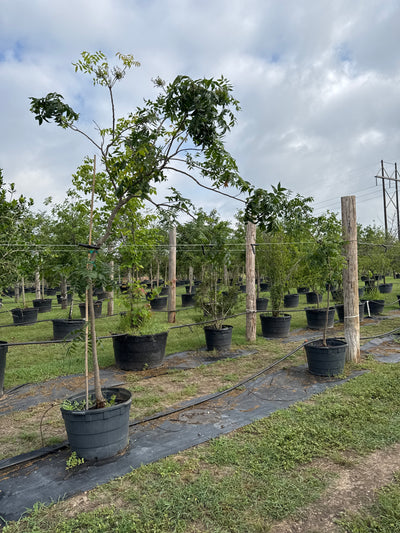


Peach Redhaven

Peach Redhaven
🌱 Planting Installation
The Redhaven Peach is widely considered the "gold standard" of the peach world. Developed by Michigan State University, it is the benchmark against which all other early-to-mid-season varieties are measured for flavor, appearance, and reliability. It produces medium-to-large, nearly fuzz-less peaches with a brilliant red blush over a golden-yellow ground color. The flesh is firm, melting, and exceptionally sweet, making it a favorite for gourmet fresh eating. One of its most prized culinary traits is its resistance to oxidation (non-browning flesh). Unlike other varieties, the flesh stays bright yellow long after being sliced, which is ideal for fresh fruit tarts, salads, and visually appealing preserves. The Redhaven Peach is also known as a "semi-freestone" peach, the pit becomes fully free from the flesh when the fruit is dead-ripe. It is highly productive and possesses a natural resistance to Bacterial Spot, a common challenge for growers in humid climates. Beyond its fruit, the tree is a stunning landscape specimen, featuring showy, bright pink spring blossoms and lush, lustrous green foliage that turns a golden-bronze in the autumn.
| Scientific Name | Prunus persica 'Redhaven' |
|
Foliage: Deciduous |
Leaves: Long, tapered, and lance-shaped with finely serrated margins. They are a deep, lustrous green and slightly larger than those of the Reliance. Flowers: Showy, bright pink blossoms that appear in early spring. They are highly ornamental and provide a massive "pop" of color to the landscape. Fruit: Medium-to-large with a beautiful, nearly fuzz-less skin. It features a bright red "blush" over a golden-yellow background. Seeds: A single, oval brown pit (stone). It is semi-freestone (clings slightly when early-season, but pulls away cleanly when fully ripe). Bark: Dark reddish-brown and smooth on young wood; matures into a rougher, gray-brown texture with vertical fissures. |
| Life Span: Perennial | The average lifespan is about 12 to 15 years. While commercial orchards often replace them after 10 to 12 years as fruit production slows down, backyard trees receiving exceptional care can sometimes live up to 20 years or more |
| Mature Height | 15 – 20 feet (Standard); 8 – 12 feet (Semi-dwarf). |
| Mature Width (Spread) | 12 – 15 feet (Spreading, rounded canopy). |
| Growth Rate | Fast. It is a vigorous grower that fills out a landscape quickly. |
| USDA Zone/Chill Hours | Zone 5 – 9 (Excellent heat tolerance for Southern climates); Requires 800 – 900 chill hours (Requires a solid winter to set fruit). |
PLANT CARE & CHARACTERISTICS
Light Requirements: Full Sun. Minimum 8 hours. High light is essential for the characteristic deep red "blush" on the fruit skin. Full sun exposure is essential for promoting vigorous growth, flowering, and fruiting. The sunlight helps enhance the sweetness and flavor of the fruit.
Water Requirements: Moderate to High. Requires consistent deep watering (1–1.5 inches per week), particularly during the "final swell" (the 2 weeks before harvest).
Drought Resistance: Low. Like most stone fruits, moisture stress will lead to small, bitter fruit and can cause the tree to drop its leaves prematurely.
Soil Type: Well-Drained Sandy Loam. Thrives in fertile soil with a pH of 6.0–7.0. It is highly intolerant of "wet feet" or heavy, standing clay.
Deer Resistance: Low. The high sugar content and tender foliage make this a primary target for local deer populations.
Pest/Disease Resistance: Moderate. Redhaven has a natural resistance to Bacterial Spot, which is a common headache for peach growers in humid areas. This makes it a "cleaner" looking tree in the landscape compared to more sensitive varieties. However, it remains susceptible to Peach Leaf Curl and Brown Rot if airflow is poor. It is a primary target for birds. Installing bird netting just as the fruit begins to turn red is a small step that saves a massive amount of the harvest.
Pollination: Self-Fertile. This variety does not require a second tree to produce a full harvest, making it ideal for smaller residential yards.
Harvest: Early to Mid-Summer. Typically ripens in July. It is known for a long harvest window, often ripening over a 2-week period rather than all at once.
YIELD
| Tree Age | Yield (Lbs) | Estimated Fruit Count |
| Year 1: Establishment | 5 – 12 lbs | 20 – 45 peaches |
| Year 2: Expanding | 25 – 50 lbs | 100 – 200 peaches |
| Year 3: Sub-Mature | 60 – 90 lbs | 240 – 360 peaches |
| Year 4: Sub-Mature | 100 – 150 lbs | 400 – 600 peaches |
| Year 5+: Full Maturity | 200 – 250+ lbs | 800 – 1,000+ peaches |
STORAGE/SHELF LIFE
| STORAGE METHOD | SHELF LIFE | NOTES |
| Countertop (Room Temp) |
3 – 5 Days | Best for ripening to a "melting" texture. |
| Refrigerator (33°F - 38°F) |
10 – 14 Days | Holds firm well; excellent for staggered fresh eating. |
| Canning/ Sliced |
1 – 2 Years | Gold Standard: Flesh doesn't turn brown or "mushy." |
| Dehydrated | 12 Months | Firm flesh makes uniform, high-quality dried peach rings. |
PRUNING
1. Creating the "Bowl" or "Open Vase" Strucure with Branch Spreaders: Redhaven branches naturally want to grow upward.
- The Action: While the wood is young and flexible, use branch spreaders (or even small notched laths) to push the scaffold branches out to a 45-to-60 degree angle.
- The Benefit: This "opens the throat" of the tree, allowing sunlight to hit the interior wood where next year's fruit buds are forming.
2. The "Rule of Thirds" for Heading Back: Because Redhaven is a fast grower, the branches can become "leggy" (long and thin).
- The Technique: Every winter, cut the main scaffold branches back by about one-third. Always cut just above an outward-facing bud.
- The Result: This forces the branch to grow "out and away" from the center rather than "up and in." It also thickens the wood, creating a rigid structure.
3. Managing the "Fruiting Zone": Peaches only fruit on the reddish-colored growth from the previous year.
- The Strategy: Remove any gray, older wood that doesn't have new red shoots on it.
- The Logic: This keeps the fruit close to the main structural branches where the tree can support the weight, rather than at the very tips of long, flimsy twigs.
4. Strategic Thinning: The Redhaven is a "heavy setter," meaning it will produce far more fruit than it can physically support.
- The Action: During your maintenance checks, ensure fruit is thinned to one peach every 6 inches.
- The Result: Failure to thin will result in broken branches and small, "pit-heavy" fruit. Proper thinning ensures the large, 3-inch diameter peaches the Redhaven is famous for.
5. Hygiene & Disease Prevention: Redhaven’s resistance to Bacterial Spot is high, but it still requires clean pruning practices.
- The Maintenance: Always remove "mummies" (dried-up peaches from the previous year) still hanging on the tree. These are reservoirs for disease.
- The Tool Kit: Keep your shears sharp. A ragged cut on a peach tree is an invitation for Borer insects to enter the trunk.
PRUNING SUMMARY
| Pruning Phase | Timing | Primary Goal |
| Scaffold Selection | At Installation | Choosing 3–4 "main arms" that face different compass points. |
| Thinning the "Red Wood" | Late Winter | Removing 50% of the previous year's growth to keep fruit size large. |
| Light Penetration | Mid-Summer | Removing vertical "water sprouts" from the center of the "bowl." |


