


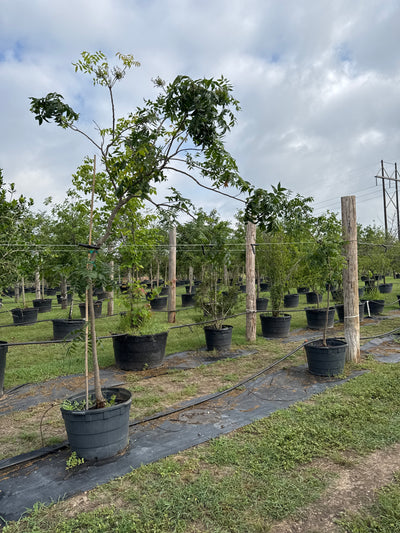


Peach Belle of Georgia


Peach Belle of Georgia
🌱 Planting Installation
The 'Belle of Georgia' is the quintessential Southern heirloom peach. First discovered in the 1870s, it has remained a favorite for over 150 years because it offers a flavor profile that modern "supermarket" peaches often lack. It is a white-fleshed, freestone peach. Unlike yellow peaches that have a "tangy" bite, the 'Belle of Georgia' is exceptionally low in acid and high in sugar, resulting in a creamy, honey-sweet, and floral taste. The fruit is large and beautiful, featuring creamy-white skin decorated with a bright red or crimson blush. In the spring, the tree is a showstopper, covered in vibrant, bright pink blossoms. It is a vigorous, fast-growing tree with a spreading habit. It is "self-fertile," meaning it’s a great choice for smaller yards where you only have room for one tree. It is the top choice for people who enjoy canning, freezing, or making preserves, though most people find it hard to resist eating them fresh off the branch.
| Scientific Name | Prunus persica ‘Belle of Georgia’ |
| Foliage: Deciduous |
Leaves: Long, lance-shaped, and dark green with finely serrated edges. They have a graceful, drooping habit. Flowers: Beautiful, showy pink blossoms that cover the tree in early spring. Fruit: Large, firm, and round. The skin is a creamy white/greenish-yellow with a bright red blush. The flesh is brilliant white, freestone (the pit pulls away easily), and incredibly juicy. Seeds: A single, large, deeply pitted stone (endcarp) in the center. Bark: Smooth and reddish-brown when young, developing "lenticels" (small gas-exchange pores). As it ages, it becomes grey-brown and slightly scaly. |
| Life Span: Perennial | The average lifespan is 15 to 20 years. |
| Mature Height | 15-25 feet |
| Mature Width (Spread) | 8-20 feet |
| Growth Rate | Fast-growing |
| USDA Zone/Chill Hours |
Zone 5-8 (Thrives in the heat of the Southeast); Requires about 800-850 chill hours (this is a high-chill tree; it needs a solid winter to fruit properly). |
PLANT CARE & CHARACTERISTICS
Light Requirements: Full Sun. Needs at least 6 to 8 hours of direct sunlight.
Water Requirements: Regular, consistent moisture is required, especially for young trees, which should not be allowed to dry out between waterings. Rather than a light sprinkle every day, give the tree a deep soak (5-10 gallons for a young tree; 15-20 for a mature one) once or twice a week. This encourages the roots to grow deep into the soil. To make your watering more efficient, apply a 3-inch layer of wood mulch around the base of the tree (extending out to the "drip line" of the branches). This keeps the soil temperature cool and prevents up to 70% of water evaporation. Just make sure the mulch isn't touching the bark of the trunk!
Drought Resistance: Low to Moderate. It is generally not considered a highly drought resistant tree, although it can survive dry spells, the fruit will be smaller and bitter without regular watering.
Soil Type: Loamy & Well-Drained. Peach trees are highly susceptible to Root Rot so if you have a heavy clay soil that stays soggy for more than 24 hours after a rain, you should plant the tree on a slight mount (4-6 inches high) to ensure the "crown" (where the trunk meets the roots) stays dry.
Deer Resistance: Low. Deer love peach foliage and the ripening fruit.
Pest/Disease Resistance: Moderate/Good. Like most peaches, it is susceptible to Peach Leaf Curl, Brown Rot, and Bacterial Spot. It is, however, notably hardier and more disease-resistant than many other white peach varieties. Direct morning sun is vital because it dries the dew off the leaves and fruit quickly, preventing fungal spores from germintating. Because this variety is so high in sugar and has thin skin, it is a magnet for June bugs, wasps, and birds right as it ripens. If you see the local wildlife starting to take bites, it’s a sign that the harvest has officially begun. You may want to pick the rest of the nearly-ripe fruit and let them finish on your kitchen counter to save them from the "critter tax."
Pollination: Self-pollinating. You only need one tree to get a full crop of peaches. However, having a second peach variety nearby can increase the total fruit set and weight by up to 10-15%.
Harvest: Late July to August. Mid-to-late season peach. The fruit on a single tree typically ripens over a 10–14 day period. You cannot harvest the whole tree at once; you’ll need to visit it every other day to pick the ones that have reached peak sugar.
4 SIGNS OF A RIPE 'BELLE OF GEORGIA'
1. The "Ground Color" Shift: This is the most reliable indicator. Look at the "background" of the skin (the parts without the red blush). It will change from a hard green to a creamy, pale yellow or soft white.
2. The "Nose" Test: A ripe 'Belle of Georgia' is incredibly aromatic. On a warm afternoon, you should be able to smell the floral, honey-like scent just by standing near the tree.
3. The Firmness (Shoulder Test): Give the peach a very gentle squeeze near the stem (the "shoulder"). It should have a slight "give," like a ripe avocado. Warning: Avoid squeezing the middle of the peach, as white peaches bruise instantly and will develop brown spots where you touched them.
4. The Ease of Release: Cup the peach in your hand and give it a slight upward twist. A ripe peach will "snap" off the branch easily. If you have to pull hard, the sugars aren't fully developed yet.
YIELD
| Tree Age | Yield (in lbs) | Yield (in Bushels) |
| Year 1: Establishment | 0 lbs | 0 |
| Year 2: "Taster" Crop | 5 – 10 lbs | ~1/5 Bushel |
| Year 3: First Real Harvest | 25 – 50 lbs | 1/2 – 1 Bushel |
| Year 4: Expansion | 75 – 125 lbs | 1.5 – 2.5 Bushels |
| Year 5+: Full Maturity | 150 – 300+ lbs | 3 – 6 Bushels |
STORAGE/SHELF LIFE
| STORAGE METHOD | SHELF LIFE | NOTES |
| Countertop (Room Temp) |
1 – 3 Days | Ripening firm fruit. Do not stack them; the weight of the top peaches will bruise the bottom ones. |
| Refrigerator (33°F - 40°F) |
3 – 5 Days | Slowing down the ripening of fully soft fruit. Store in a perforated plastic bag to maintain humidity. |
| Freezer (Sliced/Pitted) |
8 – 12 Months | Slice the peaches, lay them flat on a baking sheet to freeze individually, and then bag them. This prevents them from turning into a solid "peach brick." Great for making smoothies, baking, and desserts. Toss with a little lemon juice to prevent the white flesh from browning. |
| Canned/ Preserved |
1 – 2 Years | Long-term storage. This is the "Gold Standard" variety for Southern peach preserves. Because this variety is so high in natural sugars, you can often use less added sugar when making jams or jellies compared to yellow peach recipes. |
Critical Handling Tips for White Peaches
1. The "Bruise Factor": Because Belle of Georgia has such melting, tender flesh, it bruises much more easily than modern commercial varieties. Handle the fruit with the "palm" of your hand rather than your fingertips to avoid leaving dark pressure marks.
2. The Ripening Window: Unlike some fruit, peaches do not get sweeter after they are picked—they only get softer. For the best flavor, leave them on the tree until the "ground color" (the part of the skin not covered in red blush) shifts from green to a creamy white.
3. Avoid "The Mealy Zone": Storing peaches between 36°F and 50°F for more than a couple of days can sometimes lead to a "mealy" or woolly texture. It is best to either keep them on the counter to eat immediately or keep your refrigerator at its coldest setting (near 33°F) to truly "halt" the ripening process. Typically these peaches will last 3–5 days in the refrigerator.
PRUNING
The Belle of Georgia is a vigorous grower, often putting on several feet of new wood each year. Because peaches only fruit on one-year-old wood (the reddish-colored growth from the previous season), aggressive annual pruning is the only way to ensure a consistent harvest and prevent your tree from becoming a tangled, unproductive thicket.You should remove about 40% of the previous year's growth each year to keep the fruit within reach and encourage new "fruiting wood" to grow.
1. The "Open Center" (Vase) Shape: Peach trees, especially the Belle of Georgia, require maximum sunlight in the center of the canopy to ripen their white flesh and prevent fungal diseases.
- The Main Scaffolds: Aim for 3 to 5 main branches growing outward at a 45-degree angle.
- The "Hollow" Middle: Cut out any branches growing toward the center of the tree. If a bird cannot fly through the middle of your tree, it is too dense.
- Height Control: Head back the top of the scaffolds to a height where you can comfortably harvest (usually 7–9 feet).
2. Identifying "Fruiting Wood": When you prune in the winter, look for the reddish-pink shoots that grew the previous summer.
- The Sweet Spot: Shoots that are about the thickness of a pencil and 12–18 inches long are the most productive.
- The Cut: Shorten these fruiting shoots by about one-third. This keeps the heavy peaches closer to the main branch, reducing the risk of broken limbs.
3. The "Rule of Six Inches" (Fruit Thinning): This is the most painful but important part of pruning a Belle of Georgia. This variety often "over-sets," meaning it grows more fruit than the tree can physically support. If you don't manually remove 60–80% of the tiny green peaches in late spring, the branches may literally snap under the weight.
- When the peaches are about the size of a dime, remove enough fruit so that there is only one peach every 6 to 8 inches along the branch.
- Why? This directs all the tree's sugar into the remaining peaches, ensuring they grow into the large, juicy fruits the "Belle" is famous for.
4. Specific Maintenance Tips
- Outward-Facing Buds: When shortening a branch, always make your cut just above a bud that is facing away from the center of the tree. This ensures the new growth goes outward, maintaining the "Vase" shape.
- Sanitation: Peach trees are susceptible to cankers and rot. Always clean your shears with rubbing alcohol between trees to prevent spreading infections.
- Latex & Sap: While not as irritating as fig sap, peach trees can "bleed" clear amber-colored sap if pruned too late in the spring. Try to finish your heavy pruning before the pink blossoms begin to open.


