


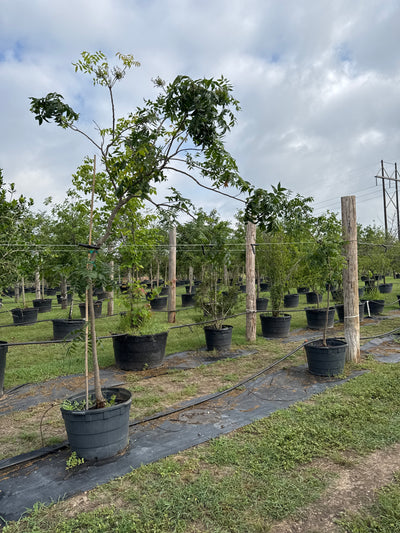


Apple Yellow/Golden Delicious


Apple Yellow/Golden Delicious
Location on Farm:
🌱 Planting Installation
Yellow or Golden Delicious apples are often called the "Mother of Apples" because it has been used to breed so many other varieties (including the 'Gala' and 'Pink Lady'). The Golden Delicious is a cornerstone of the home orchard. Unlike the 'Red Delicious', which it is not actually related to, the Golden is a "spur-bearing" tree that is exceptionally easy to grow. Golden Delicious produce medium to large-sized fruits with a characteristic golden-yellow skin that may have a slight blush or mottling. The flesh is juicy, crisp, and aromatic, with a sweet flavor and mild tartness. The fruit ripens in late summer to early fall and stores well, making it a popular choice for fresh eating, baking, and juicing.
| Scientific Name | Malus domestica 'Golden Delicious' |
|
Foliage: Deciduous |
Leaves: Large, oval, and slightly folded along the mid-rib. They are a bright, medium green with a serrated margin and a smooth, almost waxy texture on top. Flowers: Profuse, fragrant blossoms. They open from pink-tinted buds into large, creamy white flowers. This tree is famous for its "flower power." Fruit: Large, conical to oval shaped. The skin is a brilliant greenish-yellow that turns pure gold when ripe, often dotted with small brown specks (lenticels). The flesh is firm, crisp, and exceptionally sweet. Seeds: Typical of the species: small, dark brown, and teardrop-shaped, housed in a star-shaped central core. Bark: Smooth and silver-grey on young trees; as it matures, it stays relatively smoother than the Red Delicious, though it will eventually develop shallow furrows and a darker grey hue. |
| Lifespan: Perennial |
Dwarf: 15 to 25 years Semi-Dwarf: 25 to 40 years Standard (Full Size): 40 to 65+ years |
|
Mature Height |
Dwarf: 8 to 10 feet Semi-Dwarf: 12 to 15 feet Standard (Full Size): 20 to 25 feet |
|
Mature Width (Spread) |
Generally spreads as wide as it is tall, developing a very rounded, symmetrical, and open canopy. (8-25 feet depending on rootstock). |
|
Growth Rate |
Moderate to Fast. It is a vigorous grower that establishes itself quickly. |
|
USDA Zone/Chill Hours |
Zone 4-9 (Highly adaptable to both cold and warm climates); Requires 600-700 chill hours (below 45°F) |
PLANT CARE & CHARACTERISTICS
Light Requirements: Full Sun (8+ hours). Good sunlight is required to develop the "golden" color and high sugar content.
Water Requirements: Moderate. While it is more resilient than the Red Delicious, it still requires consistent moisture to prevent "bitter pit" (a calcium deficiency often triggered by uneven watering). Water regularly, especially during dry periods and when the tree is fruiting, to keep the soil consistently moist but not waterlogged is essential.
Drought Resistance: Moderate; While it can handle brief dry spells, it needs consistent watering to prevent Bitter Pit (small brown sunken spots on the fruit) and ensure the apples stay juicy.
Soil Type: Prefers rich, well-drained loamy soil with a pH between 6.0-7.0. Prior to planting, it's beneficial to amend the soil with organic matter such as compost or aged manure to improve soil structure and fertility. Fertilize the trees annually with a balanced fertilizer formulated for fruit trees, following the manufacturer's instructions.
Deer Resistance: Low. Deer find the high sugar content and strong aroma of Golden Delicious particularly irresistible. In fact, many hunters plant these specifically to attract wildlife. You will need fencing or trunk guards to protect young trees
Pest/Disease Resistance: It is moderately resistant to Fire Blight and Apple Scab, but it is highly susceptible to Cedar Apple Rust and powdery mildew. Aphids are its primary nemesis; they love the lush, waxy leaves. Like most apples, it will also attract Codling Moths if not monitored.
- Pro-Tip: Because Golden Delicious is susceptible to Powdery Mildew, always prune to maximize airflow. If the wind can move through the tree easily, the leaves will dry faster after rain, significantly reducing disease risk.
Pollination: Partially self-fertile, meaning it can produce fruit on its own. However, for a larger harvest it should be paired with a partner. The best partners are 'Red Delicious', 'Fuji', or 'Gala'.
Harvest: Late September to early October. Ripens about 2 weeks after 'Red Delicious'. In warmer zones, it may be ready in early September.
HARVEST TIMELINE
| Years 1-2 | Focus on growth. Remove any blossoms to ensure the tree puts its energy into roots and branches rather than fruit. |
| Years 3-4 | You will likely see your first "home harvest." A young tree can produce roughly 15–40 lbs of fruit. |
| Years 5-7 | The tree enters its "teenage" phase. Yields increase rapidly as the canopy fills out. |
| Years 8-10+ | The tree reaches full commercial maturity. At this stage, it will produce its maximum annual yield for the next 30+ years. |
YIELD
| Tree Size | Annual Yield (Bushels) | Annual Yield (Pounds) | Approx. Apple Count |
| Dwarf | 2–5 bushels | 80–210 lbs | 250–650 |
| Semi-Dwarf | 6–12 bushels | 250–500 lbs | 750–1,500 |
| Standard | 12–25+ bushels | 500–1,000+ lbs | 1,500–3,000+ |
STORAGE & SHELF LIFE
| STORAGE METHOD | SHELF LIFE | NOTES |
| Countertop (Room Temp) | 7-10 days | Because of its thin skin, it loses moisture (shrivels) much faster than thicker-skinned apples if left out. |
| Refrigerator (32-38°F) | 3-5 months | Keep them in a plastic bag with a few air holes to maintain high humidity and keep them crisp. |
Best Uses
Because the flavor of a Golden Delicious is naturally sweet and mellow, it is the gold standard for:
1. Freezing: They hold their shape better than most when thawed
2. Drying: They make excellent, naturally sweet apple chips.
3. Baking: They don't require much added sugar in pies or tarts.
PRUNING
Pruning a Golden Delicious is a high-stakes task because the tree is a "heavy setter"—it produces so much fruit that it can literally break its own branches under the weight or exhaust itself into a "biennial" cycle (produce a huge crop one year and zero the next. Because of this massive yield, thinning is mandatory. Aim to remove 60–70% of the tiny apples in late spring. Like the Red Delicious, the Golden is a spur-bearing tree, but it is much more vigorous. Your pruning strategy should focus on thinning the wood and controlling the weight.
1. The Goal: The "Pyramid" (Central Leader)
Because Golden Delicious has such a spreading, rounded habit, you must prune it to maintain a conical shape (wider at the bottom, narrower at the top). This ensures that sunlight reaches the interior, preventing the "inner" spurs from dying off due to shade.
- The Main Leader: Keep one strong vertical trunk.
- The Scaffold: Maintain 3–4 layers of horizontal branches.
- Light Penetration: If you can’t see light through the canopy in the summer, it’s too dense.
2. Protecting the Fruiting Spurs: The Golden Delicious produces its fruit on spurs (short, knobby twigs).
- Spur Renewal: While spurs can live for 10 years, they are most productive in years 2 through 5. Every year, prune out about 10–15% of the oldest, gnakiest-looking spurs. This encourages the tree to grow new, highly productive spurs for future seasons.
3. Managing the "Vigor": Golden Delicious is a faster grower than 'Red Delicious'. You will see many water sprouts (vertical whips) and suckers (growth from the roots).
- The Zero-Tolerance Rule: Remove 100% of water sprouts and suckers every winter. They produce no fruit and steal the nutrients needed for the apples.
- Heading vs. Thinning: Use "thinning cuts" (removing a branch at its base) rather than "heading cuts" (cutting off the tip). Heading cuts on a Golden Delicious often trigger a "brooming" effect—a messy explosion of new, thin branches.
4. Pruning for Weight (The "Shortening" Cut): Because the yield is so high, the branches often grow very long and thin.
- The "Leverage" Cut: If a branch is becoming long and "weepy," prune it back to a strong, upward-facing bud. This "stiffens" the branch so it can support the 50+ lbs of fruit it might carry in October.
5. Essential: Fruit Thinning (The "Hand" Prune)- This is the most critical "pruning" step for a Golden Delicious. In late spring (when apples are the size of a marble):
- Look at each cluster (usually 4–5 apples).
- Use your fingers or snips to remove all but the largest, healthiest apple in that cluster.
- The 6-Inch Rule: Ensure there is roughly 6 inches of space between each remaining apple.
PRUNING SUMMARY
| Feature | Action Required |
| Main Shape | Central Leader (Christmas Tree) |
| Vertical Whips | Remove 100% (Water sprouts) |
| Old Wood | Thin out 10% of old spurs annually to refresh growth |
| Branch Strength | Shorten long, thin limbs to prevent snapping |